Analysis & Commentary
This section contains articles written by Global Land Alliance staff and partners, on a variety of topics relating to land tenure, rights, and governance; spanning countries around the world.

Remapping Tenure Security: Land and Associated Vulnerabilities of Urban Poor Communities in Lagos, Nigeria
While land tenure security is well-defined and supported by robust institutions in the Global North, the concept remains ambiguous and heavily contested in the Global South, particularly in Africa. Historically, land reforms have relied on generalized, Western-oriented approaches that fail to recognize the rural-urban divide or the profound spatial and socio-economic variations across different income groups. Because these universal constructs dictate tenure security policies, the resulting land reforms are often incomplete and exclusionary, systematically marginalizing the lower-middle class and the urban poor.
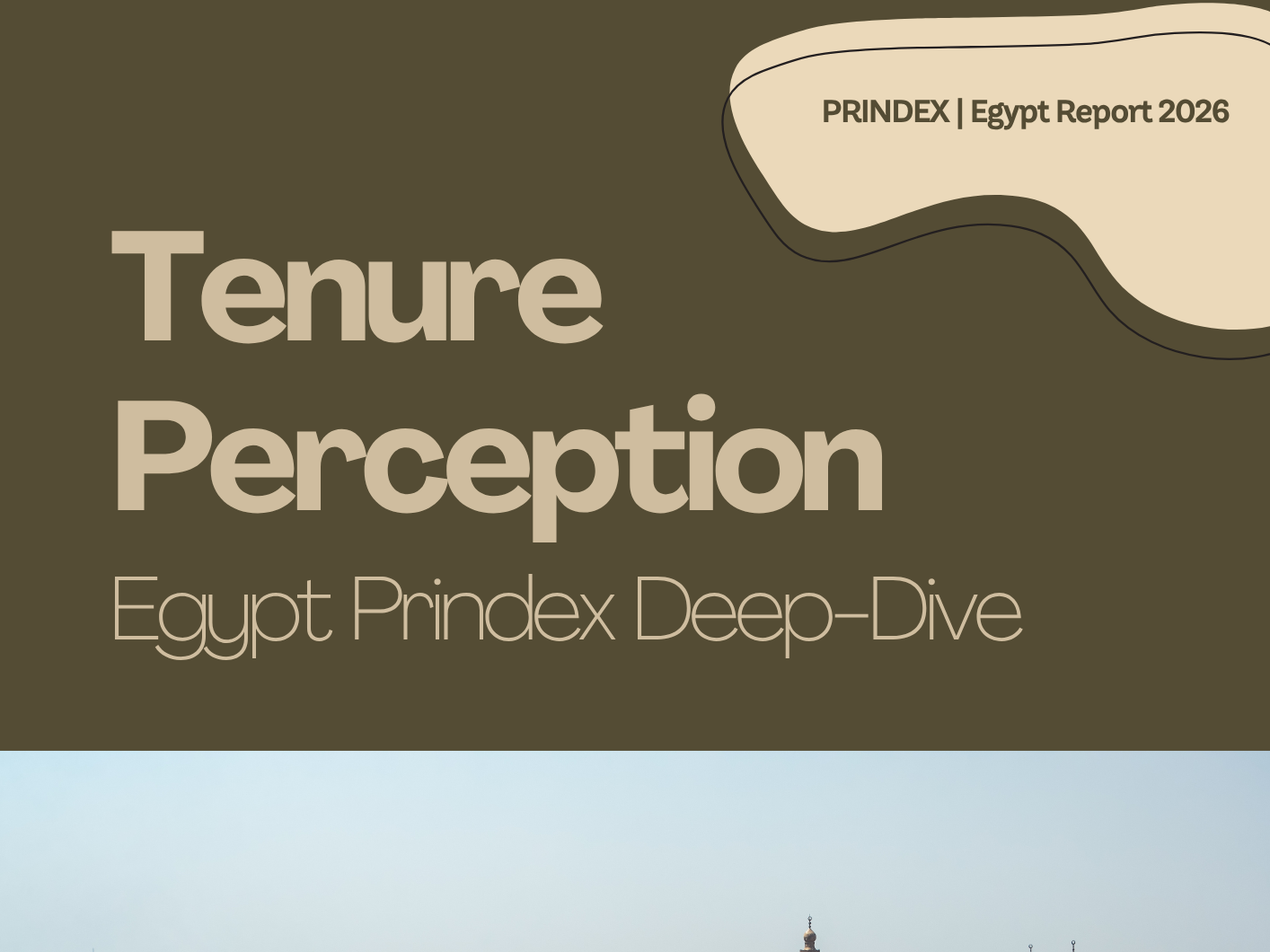
Tenure Perception: A Prindex Egypt Deep Dive
The goal of the Egypt study was to better understand the sources and prevalence of land tenure insecurity in the different housing typologies for the self-built housing . The study explores the differences in perceived tenure insecurity between holders of different categories of land documentation, clarifies the processes associated with each of these categories of documentation, and presents the unique challenges that the citizens face in these circumstances. The deep dive also aims to identify the gaps and disparities between perceived tenure security and the legal rights to property that people hold. Data on perceptions of tenure security in informal settlements can contribute to policies currently being formulated to formalize informal settlements and reform the land system.
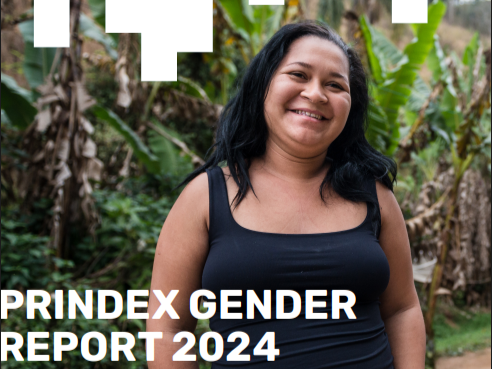
Prindex Gender Report
The Sustainable Development Goals (SDGs) indicators 1.4.2 and 5.a.1 recognise that strengthening gender equality in land and housing property rights is fundamental for poverty reduction and women’s empowerment. Securing women’s property rights can increase agricultural productivity, incentivise the adoption of climate-resilient natural resource management and increase household spending on health and education. Yet, in many parts of the world, women face legal or customary barriers to using or controlling land and other productive resources, often depending on others for this use. This not only places them on an unequal footing in life, but also restricts wider positive social, economic and environmental outcomes.

Good Practices for Strengthening Land Rights Recognition in Forestlands of the East Asia and Pacific Region (English)
This report contributes to sustainable recognition and formalization of all types of tenure (private, communal, and public) within forestlands by gathering emerging global knowledge and good practices on the topic. The aim is to guide decision-makers, practitioners, and other stakeholders working on the topic in the EAP region and elsewhere. The scope of the report is not limited to forests inside forestlands but also covers recognition and formalization of other land types located within forestlands, such as agricultural and residential lands.

ZAMBIA FOREST ACT GENDER AND YOUTHRESPONSIVE LEGAL ANALYSIS, DIALOGUES, AND CAPACITY STRENGTHENING
Zambia’s forest resources are one of its most valuable assets. They cover over 60 percent of Zambia’s land mass (Eighth National Development Plan, p. 9), and provide livelihood support, food security, medicinal and health resources, cultural and aesthetic benefits, wildlife habitat, biodiversity, critical resources for climate change mitigation and clean air, and in recent years have been recognized globally for the value of their carbon stores. For over a decade, the Government of Zambia has worked to improve management of the forests to ensure both ecological sustainability and socially inclusive governance and benefits sharing. Through the 2015 Forest Act and ensuing regulations, the government promoted community-based forestry governance, a system that has now been in place for over ten years

“Collective tenure rights and climate action in sub-Saharan Africa” Publication from GLA and FAO
Global Land Alliance is thrilled to share “Collective tenure rights and climate action in sub-Saharan Africa: What are priority investments in rights to achieve long-term sustainability of forest areas?”, a joint publication with FAO. The study on collective tenure rights and climate action in sub-Saharan Africa aims to consolidate and analyse the state of the evidence on how tenure arrangements – in particular collective ownership and management of forests operating in complex systems of contingent factors – impact forest condition outcomes, as well as livelihood outcomes of forest dwellers in sub-Saharan Africa.

Securing Indigenous Peoples and Local Communities’ Land Rights in the Voluntary Carbon Market
Ensuring local people and communities have control, access, and security to their land, property and housing is necessary to ensure climate action is legal, environmentally sustainable, socially just, economically viable, and implementable. This is especially urgent when it comes to the land rights of Indigenous Peoples (IPs) and to those of local communities (LCs) in the nature-based markets, in particular in the Voluntary Carbon Market (VCM). Estimates show that IPs and LCs customarily hold and manage least half of world’s land[2]. Tenure security underpins their ability to make decisions, adapt and sustainably manage natural resources and is today considered pivotal in the fight against climate change[3]. Paradoxically, IPs and LCs land rights have come under increased threat through the VCM. GLA believes it is crucial to collectively advance thinking, dialogue, and action on the role of land rights and tenure security to make the VCM and other nature-based markets equitable, efficient and sustainable.

Free, Prior and Informed Consent (FPIC) for Fair and Equitable Land Governance
Indigenous Peoples and Local Communities (IPLCs) across the world are affected by environmental, social and cultural degradation that are tied to the way land tenure is governed. In international discourse there has been an increasing focus to not just uplift the struggles of IPLC, but to make sure that their voices, sovereignty and knowledge have a seat at the table. The inclusion of Indigenous peoples in decision making processes and self-determination goes beyond consultation, the rights set forth under United Nations Declaration on the Rights of Indigenous Peoples (UNDRIP) obliges the free, prior and informed consent.

Invisible and Excluded – Risk to Informal Wives and Partners from Land Tenure Formalization Campaigns in Latin America Presentation at the 2023 Conference of Latin American Geography (CLAG)
This included slide-presentation depicts the research paper ,“Invisible And Excluded: Risks To Informal Wives And Partners From Land Tenure Formalization And Titling Campaigns In Latin America” published at the Conference of Latin American Geography (CLAG) 2023.

Treaties, Indigenous Land and Resource Rights in the Great Lakes and Enbridge’s Line 5 Pipeline: Interview with Whitney Gravelle
This summer, Global Land Alliance (GLA) spoke with Whitney Gravelle, president of the Bay Mills Indian Community in Michigan. We discussed with community leaders to better understand their voices, actions and leadership in the struggle against encroachment from Enbridge Energy Corporation. We also explored, how different levels of the US government handled treaty rights in their ceded and unceded territories, consulted or sought Free, Prior and Informed Consent (FPIC) processes, and how they see the Line 5 pipeline interacting with sovereignty over the land and waters their communities have long stewarded.

Treaties, Indigenous Land and Resource Rights in the Great Lakes and Enbridge’s Line 5 Pipeline: Interview with Aurora Conley
This summer, Global Land Alliance (GLA) spoke with Aurora Conley, Vice Chair of the Anishinaabe Environmental Protection Alliance and of the Bad River Band of Lake Superior Chippewa. We discussed with community leaders to better understand their voices, actions and leadership in the struggle against encroachment from Enbridge Energy Corporation. We also explored, how different levels of the US government handled treaty rights in their ceded and unceded territories, consulted or sought Free, Prior and Informed Consent (FPIC) processes, and how they see the Line 5 pipeline interacting with sovereignty over the land and waters their communities have long stewarded.

Rapid Needs Assessment: Protecting Property Rights during and after the War in Ukraine
The full-scale war by the Russian Federation against Ukraine has already lasted for more than six months, and its toll is immense. Many thousands of civilians and tens of thousands of combatants have been killed. About 14 million Ukrainians have fled their homes and more than 1.2 million families have their homes damaged or destroyed. The losses to property include not only the physical destruction and damage of buildings and productive land plots, but also looting, forced evictions and contamination with explosives, as well as damage of critical infrastructure (water, electricity, heating supplies, roads, social service infrastructure).

Land Tenure Insecurity and Climate Adaptation: Socio-Environmental Realities in Colombia and Implications for Integrated Environmental Rights and Participatory Policy
Our planet has warmed 1 degree Celsius since the nineteenth century. In 2018, the Intergovernmental Panel on Climate Change released a land- mark special report demonstrating how the climate has changed and the future impacts that could be avoided if continued global warming is limited to 1.5 degrees Celsius. To do so requires reaching ‘net zero’ carbon dioxide (CO2) emissions by 2050, which could only be accomplished by overhauling the global economy.

People-Land Relationships on the Path to Sustainable Food Security
Land tenure security is one driver of success in sustainable agriculture for food security. Here, we review the global rhetoric and evidence trends and map the evidence against both Sustainable Development Goal 2 and the World Food Program definition of Food Security. We recognize how conflict, impacts of climate change, and large-scale land-based investments interact over time with local land tenure, resulting in consequences for sustainable agriculture and food security.

Prindex Baseline Data and Final Analytical Report - Colombia Land For Prosperity
This report presents the results of the perception of land tenure security—the Prindex survey—in 10 municipalities1 across Colombia which were selected for the implementation of the Land for Prosperity (LFP) Activity as some of the most vulnerable areas affected by the armed conflict.

Invisible And Excluded: Risks To Informal Wives And Partners From Land Tenure Formalization And Titling Campaigns In Latin America
Latin American countries have pursued rural land titling and registration campaigns over the past several decades with a broad range of social and economic goals. These efforts represent a permanent or long-term legal recognition of rights to land as a primary economic asset for agricultural communities and a source of family subsistence, security, and social and cultural wellbeing. Land rights can provide multi-generational benefits to recipients.
New IPCC Climate Report Stresses Indigenous & Local Land Rights 58 times: Let’s Respond with a Concrete Tenure Plan
The latest IPCC climate report mentions tenure security a whopping 58 times. This is a welcome shift in emphasis from the UN – strengthening land rights is a just and sustainable way to protect vulnerable landscapes in the climate fight, and one that works. By the report’s own estimate, time is almost up. As we push closer to the point of no return, the world needs to stop talking and start acting. Ramping up the recognition of land rights could help us preserve enough of the natural world to pull us back from the brink.

Supporting Local Land Governance: Land Use Mapping and Community Sample Surveying in Lombok, Indonesia
In Indonesia, the decentralization of land governance remains an important step in securing recognition of rights for communities and citizens. For many local government offices, funding and technical resources has been a barrier for completing village mapping activities, leaving knowledge gaps as to how vulnerable communities are to conflict, encroachment, and insecurity. The village boundary setting and resource mapping activity of the Central Lombok District Government seeks to address this gap. In 2020 Global Land Alliance and Cadasta Foundation, working with the Indonesian organization Yasan Puter, supported a rapid sample survey to assess perceptions of land tenure insecurity and land use in the Labulia

Perceptions data reveal patterns of tenure insecurity in the Middle East and North Africa
Understanding what drives perceived security can help policymakers and urban planners make better choices. Shahd Mustafa shares new findings from Prindex’s report on land rights in the Arab region.

Honduras’ Overlapping Crises Have Their Roots in Land and Natural Resource Policy Failures
The convergence of the pandemic, climate shocks, and militarized borders presents a dire situation for human rights. Will the Biden administration prioritize support for vulnerable populations in securing land and resource rights and livelihoods to build social safety nets for crisis resiliency?