The Intergovernmental Land Tenure Commitments Were Launched at COP30: What does that Mean and how GLA is supporting
As global climate goals and commitments converge around 2030, the importance of shaping positive land tenure outcomes has never been clearer. There is no better demonstration of this trend than the landmark commitment to secure land tenure rights for Indigenous Peoples, Afro-descendents and Local Communities in Belem at COP30.
This past November 2025, 15 national governments and 1 sub-national government formally announced their support for the Intergovernmental Land Tenure Commitment, the global agreement to secure and strengthen the land tenure rights of Indigenous Peoples and local communities on 160 million hectares in tropical forest countries.
The governments launching the Intergovernmental Land Tenure Commitment include countries from across four continents, brought together by the work of the Forest & Climate Leaders’ Partnership (FCLP) and led by Peru, Norway, and Brazil. The Commitment originated in the Indigenous People’s movement and built into dialogues organized between FCLP member states.
A partnership between Global Land Alliance and Rights and Resources International (RRI) was established earlier in 2025 to officially support the collective ambition of FCLP. Through funding from UNOPS and The Land Facility, the partnership has been supporting the advancement of the land tenure rights of Indigenous Peoples and Local Communities within governments’ respective jurisdictions.
The GLA-RRI team has been providing targeted technical and legal support to participating countries., focusing thus far primarily on collaborations with governments and stakeholders in Peru, Colombia, Ecuador, Costa Rica, Nigeria, Republic of Congo, Democratic Republic of Congo, and Kenya. Our GLA-RRI partnership has been providing country level engagement through delegated teams from RRI and GLA, with each organization taking ownership over the development of national opportunity assessments and implementation strategies.
To achieve the national ambitions for the advancement of Indigenous Peoples and Local Community land rights, and in alignment with national climate and biodiversity commitments, the RRI-GLA partnership are supporting the advancement of the following agendas:
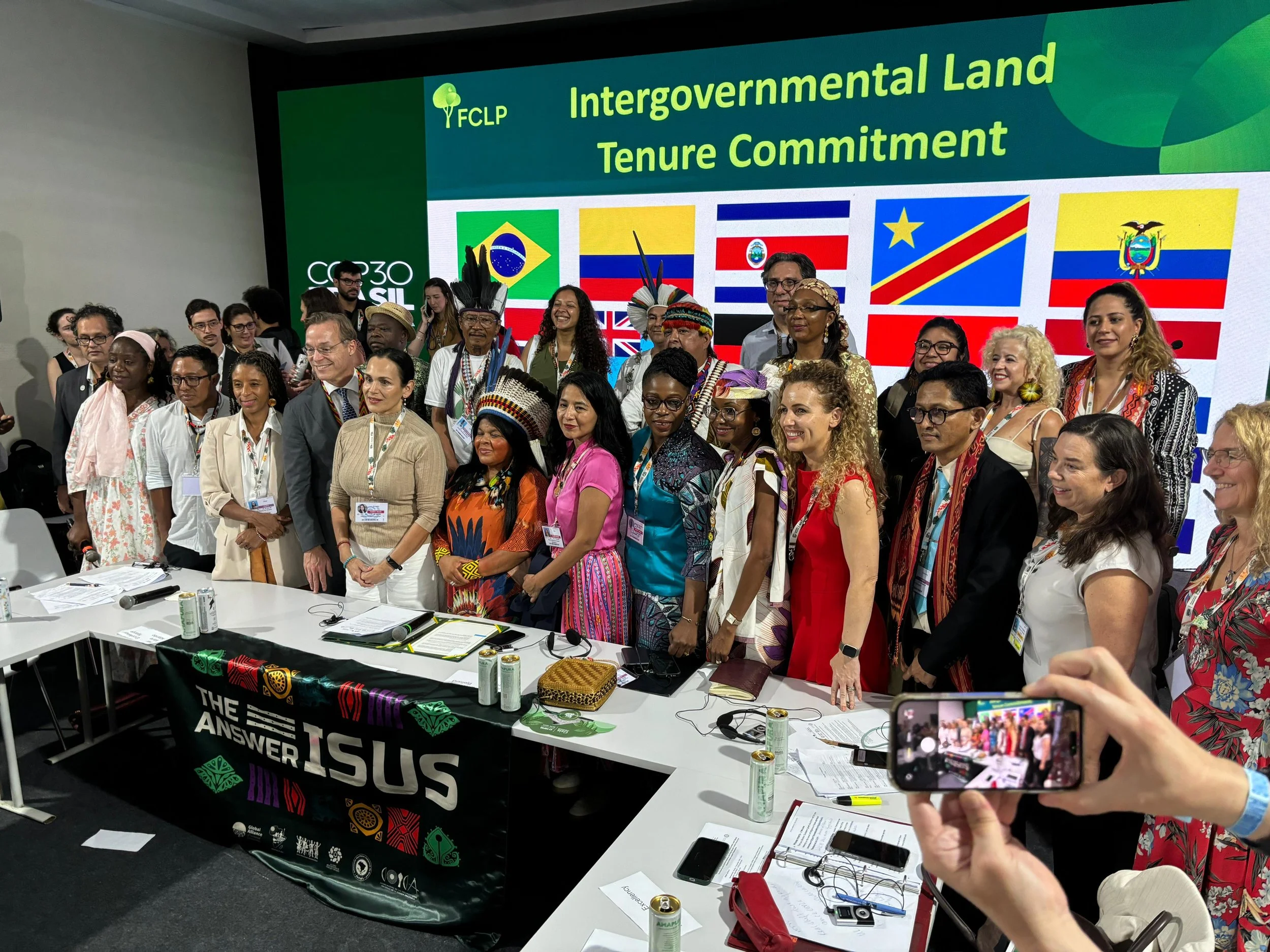
In a press release by FCLP, Kleber Karipuna, Executive Coordinator of the Articulation of Indigenous Peoples of Brazil (APIB), said:
“By adhering to the Intergovernmental Commitment on Land Governance, governments recognise the importance of the territorial rights of Indigenous Peoples and local communities as a concrete and effective action to address the climate emergency the world is facing, and indispensable to halting and reversing the loss of forests and so many other ecosystems — and that climate goals cannot be achieved without our leadership. But recognition must be accompanied by action. Often, the resources allocated to our communities are delayed by layers of bureaucracy. To bring about real change, funding must reach our people directly, and land regularisation processes must respect our governance systems and our territorial knowledge. Implemented in true partnership with Indigenous Peoples, this commitment can strengthen our ability to protect the forests that safeguard our communities and preserve nature for all humanity."
Assess the Scope of Tenure Regimes and Enabling Conditions in Committing FCLP Countries
Develop Draft Text on Increasing National Ambition on Land Tenure
Support National Opportunity Assessments on Land Tenure
Develop national implementation strategies
We have seen time and time again that securing land and forest tenure for Indigenous Peoples, Local Communities, and Afro-descendants is among the most effective ways to protect forests, wildlife, and the environmental defenders who safeguard them. We hope to continue to support national and subnational governments in their roadmap to these land tenure commitments. These efforts will directly affect opportunities for the advancement of the land and governance rights of Indigenous Peoples, Afrodescendants, and Local Communities – and ultimately advance global solutions to climate change.